


How the price is calculated
FCL is priced per container: ocean freight, port charges, delivery. Whether the box is 60% or 100% full, the price is the same.
LCL is priced on a weight-or-measure basis: one cubic metre counts as one tonne, and you pay for whichever is greater. 4 cubic metres weighing 900 kg count as 4 units. 2 cubic metres of steel weighing 3 tonnes count as 3 units.
On top of the per-cubic-metre rate come fixed costs for each shipment: the consolidation warehouse, documents, deconsolidation at destination. They barely depend on volume, so on small shipments they make up most of the bill. The minimum charge is usually one cubic metre.
Where the break-even lies
The break-even follows from a simple formula: take the full cost of a container, subtract the fixed LCL costs and divide by the LCL rate per cubic metre.
Illustrative figures: LCL costs USD 120 per cubic metre plus USD 350 in fixed costs, and a 20-foot container door to door costs USD 2,100. Then (2,100 − 350) / 120 ≈ 14.6 cubic metres. Below that volume LCL is cheaper; above it, your own container is.
Container rates and consolidation rates do not move in step, so the break-even moves too. For shipments from China it often falls somewhere between 10 and 15 cubic metres, but both options are worth recalculating before every shipment.
What matters besides price
| FCL | LCL | |
|---|---|---|
| Transit | Faster | 3–7 days longer on the same route because of consolidation and deconsolidation |
| Handling | The container is opened only at customs or at your warehouse | The cargo is handled several times at warehouses |
| Damage risk | Lower | Higher; needs sturdy packing, ideally palletised |
| Dependence on others | None | If the container is held for inspection because of someone else's cargo, everyone waits |
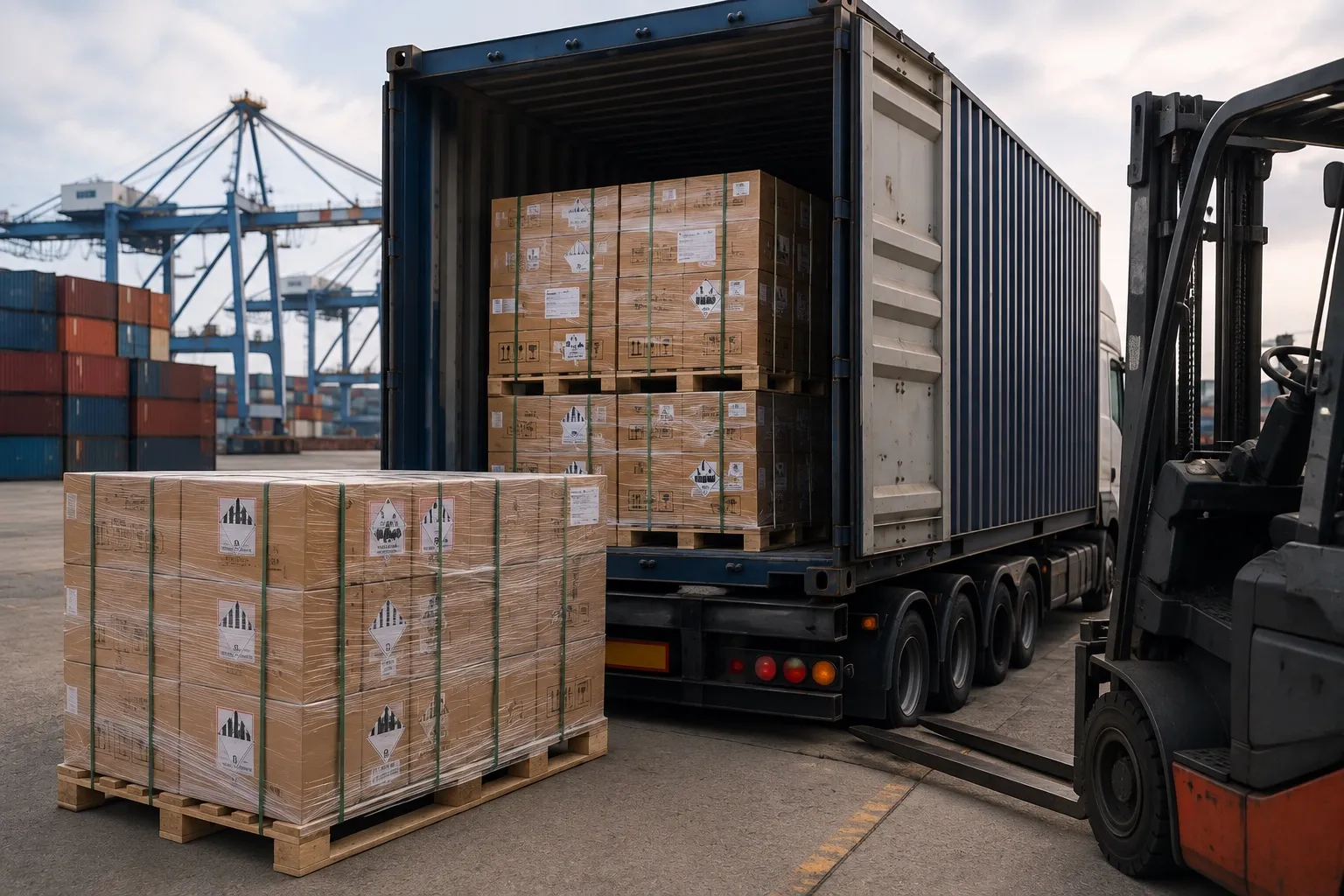
| Dangerous goods | Possible, with the line's approval | Consolidators accept them reluctantly or not at all |
When LCL is the right choice
- the volume is well below the break-even, up to 8–10 cubic metres;
- goods from several suppliers that can be combined at one warehouse into one shipment;
- a trial shipment of a new product, when it is too early to order a container;
- regular small deliveries, when you would rather not hold large stock.
When FCL is better, even if the container is not full
- the goods are fragile or valuable, and every extra handling is unwelcome;
- packages are large and heavy and awkward to move around a warehouse;
- the shipment is urgent and an extra week for consolidation is not acceptable;
- the cargo is dangerous (ADR, IMDG);
- the volume is already more than half a container.
How not to overpay for LCL
- Real dimensions. The consolidation warehouse remeasures every package. If the volume comes out higher than the supplier's documents say, the bill goes up.
- Tight packing. You pay for the air in the cartons just as you pay for the goods.
- Pallets. A pallet adds volume, but cartons are less likely to be damaged during handling.
- One shipment instead of several. Fixed costs apply to every shipment, so a combined consignment costs less than several small ones.
- The warehouse cut-off date. A supplier who is late misses the container, and the cargo waits for the next one.
More on the service on our LCL page. If your volume is consistently large, see which container suits your cargo.