


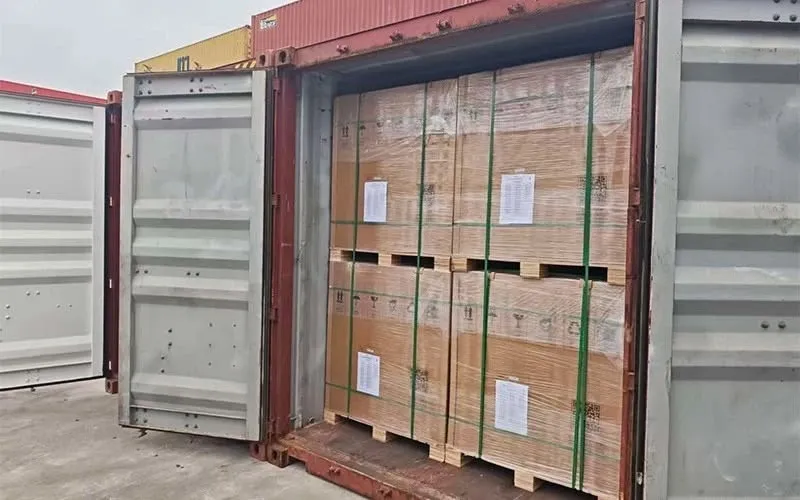
We built the route along the Trans-Caspian International Transport Route, also known as the Middle Corridor or TITR. It is the only land-and-sea path between China and Ukraine that fully avoids russian and belarusian territory. The panels and inverters were loaded into containers in Xi'an, one of China's main rail hubs for Europe-bound shipments.
The first transshipment came at the China-Kazakhstan border: the Chinese network runs on 1,435 mm standard gauge and the Kazakh one on 1,520 mm broad gauge, so the containers were craned across onto broad-gauge platforms. From there the train ran through Kazakhstan to the port of Aktau on the Caspian Sea, then by container ferry across the Caspian to Baku, and by rail again through Azerbaijan and Georgia to the Black Sea port of Poti.
We ran the sea leg from Poti to Constanța in Romania, and from there the cargo continued into Ukraine. Every junction of the corridor, each gauge change, the transfer from rail to ferry and back, the port handling, needs its own coordination, so we ran the whole chain as a single end-to-end route with one point of responsibility rather than a string of separate legs.
For documentation, each leg moved under the consignment note appropriate to its rail system, backed by a through set covering the entire route: commercial invoice, packing list, certificate of origin and transit declarations for the countries en route. The panels reached the client's site complete and in working order, ready for installation, and the fact that not a single kilometre of the journey ran through russia was, for this client, not a preference but a binding term of the contract.