


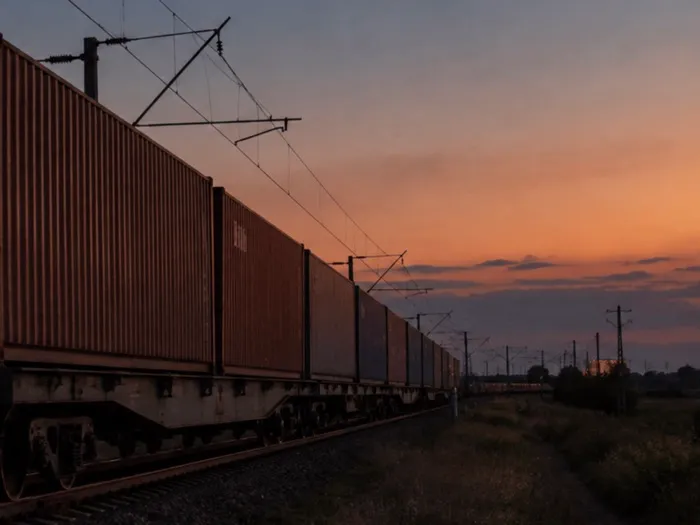
The route had to be built from scratch while the containers were already sitting at the terminal. There were two options. The first was to truck the containers out. A twenty-foot container of rice weighs close to twenty-five tonnes, so each one needs its own truck, its own paperwork and its own place in the border queue, and for the whole consignment that would have dragged on for weeks. The second was to build a train. We agreed with a Romanian rail operator on a container train from the port to the Ukrainian border. The operator supplied flat wagons and a train path; we took on the terminal side at Constanța, moving the containers off the stack, placing them for loading and forming the train. We also agreed with the line that its containers could leave Romania and settled how the empties would come back.
While the train was being assembled, the consignment went through the port controls. The rice came from a third country and was leaving the EU, so it crossed Romania under transit. We opened a T1 declaration in NCTS against a financial guarantee, running straight through to the office of destination in Odesa: Ukraine has been a party to the Common Transit Convention since 2022, so there is no need to re-declare the transit at the border. In parallel the cargo passed phytosanitary control. For rice that is more than a formality: the inspector checks the Thai phytosanitary certificate, matches container and seal numbers, and may order an inspection. We had filed the documents in advance, so the train never waited on a release.
Romania runs on 1,435 mm European gauge and Ukraine on 1,520 mm broad gauge, so the containers had to change wagons at the border. We booked container flat wagons for the train in advance and had them brought on broad gauge to the cross-border terminal. For containers a crane transfer is routine: a box moves from one wagon to the other in minutes, and nobody touches the rice inside. After the transfer the train was re-formed, a CIM/SMGS consignment note was issued for the Ukrainian section, and it left for Odesa.
In Odesa the transit was discharged, the rice cleared import phytosanitary control and customs, and the containers were handed over to the client. The entire consignment left the port on one train, crossed the border with no truck queues and was transshipped only once along the way. For the retailer that meant stock on the shelves instead of storage invoices from someone else's port.