


The route starts at sea: the consignment moves in a refrigerated container from India to the Port of Koper in Slovenia, the northernmost deep-water port on the Mediterranean, from where Central and Eastern Europe is closer overland than it is from the North Sea ports. At Koper the cargo is transferred from the sea reefer container onto a road refrigerated trailer for delivery into Ukraine, and that transfer point turned out in practice to be the weakest link in the client's previous scheme: the cold chain at sea and the cold chain on the road were logged separately, and there was nothing to prove there was no gap between them at handover.
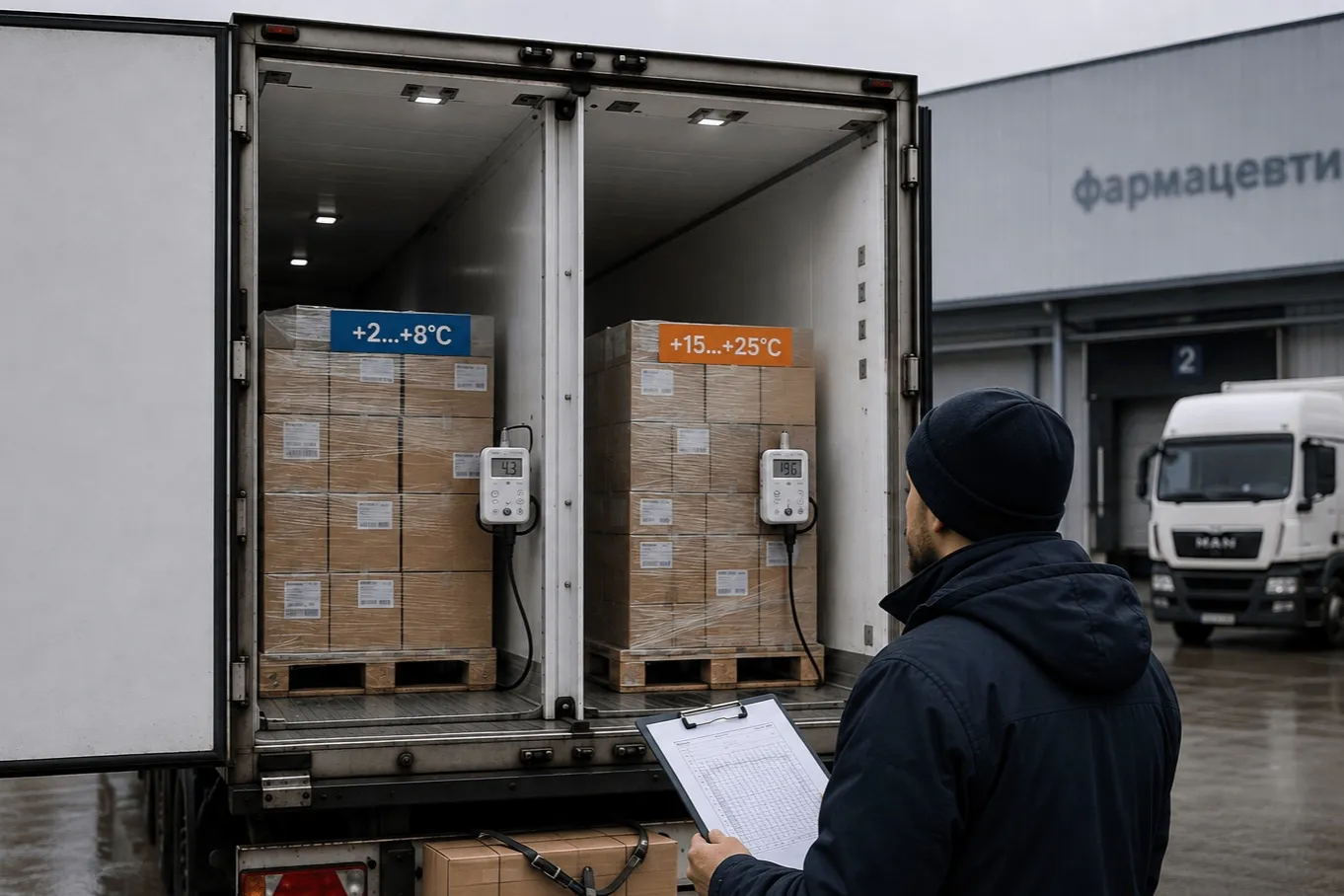
Next we separated the temperature regimes themselves. Some items need a +2…+8 °C cold chain, and nobody argues about those. The second group, +15…+25 °C, is the real trap: it gets read as not needing a fridge and travels under a standard curtainsider. In July the interior of a curtainsider comfortably passes thirty degrees, and in January it drops below zero, and both are excursions, just less obvious ones. So we moved both groups onto temperature-controlled transport starting right at Koper, and when the two regimes travelled in one vehicle we used a dual-zone trailer with a bulkhead and a separate unit for each compartment.
Next came vehicle qualification. A refrigerated trailer is not automatically GDP: to trust the readings you have to know how temperature distributes inside that particular box. We worked with vehicles that had been temperature-mapped, meaning the hottest and coldest points were identified, and it was into those points that we placed two independent calibrated recorders immediately after the transfer at Koper, rather than relying on the unit's own display. Logging ran continuously, with an alarm to the dispatcher on any deviation, and a printed temperature profile was handed over with the cargo as part of the acceptance pack. The transfer went through a temperature-controlled dock, the vehicle was sealed and not opened en route.
We separately wrote down what is usually left to the driver's judgement: what to do at the border. The slot in the electronic queue was booked against a specific departure day, the cargo travelled under a T1 transit declaration to an inland customs office rather than being cleared at the crossing point, so the truck would not stand with a live cold chain any longer than necessary. Fuel reserve for the refrigeration unit was calculated not against the planned trip duration but against a wait with margin. And crucially, the contingency for a unit failure was agreed in advance, with a list of the nearest licensed warehouses holding the right regime, rather than being invented over the phone at three in the morning.
We synchronised the regulatory side with the client: importing medicines requires a licence, medicines are subject to state quality control on entry, and storage at destination has to be licensed. Our job within that chain was to make sure neither leg, sea or road, became the weak link and would stand up to scrutiny from the quality department. The result: no excursions, every consignment accepted with a full temperature profile from Koper to the warehouse, and quarantine over unverified temperature gone from the process.