


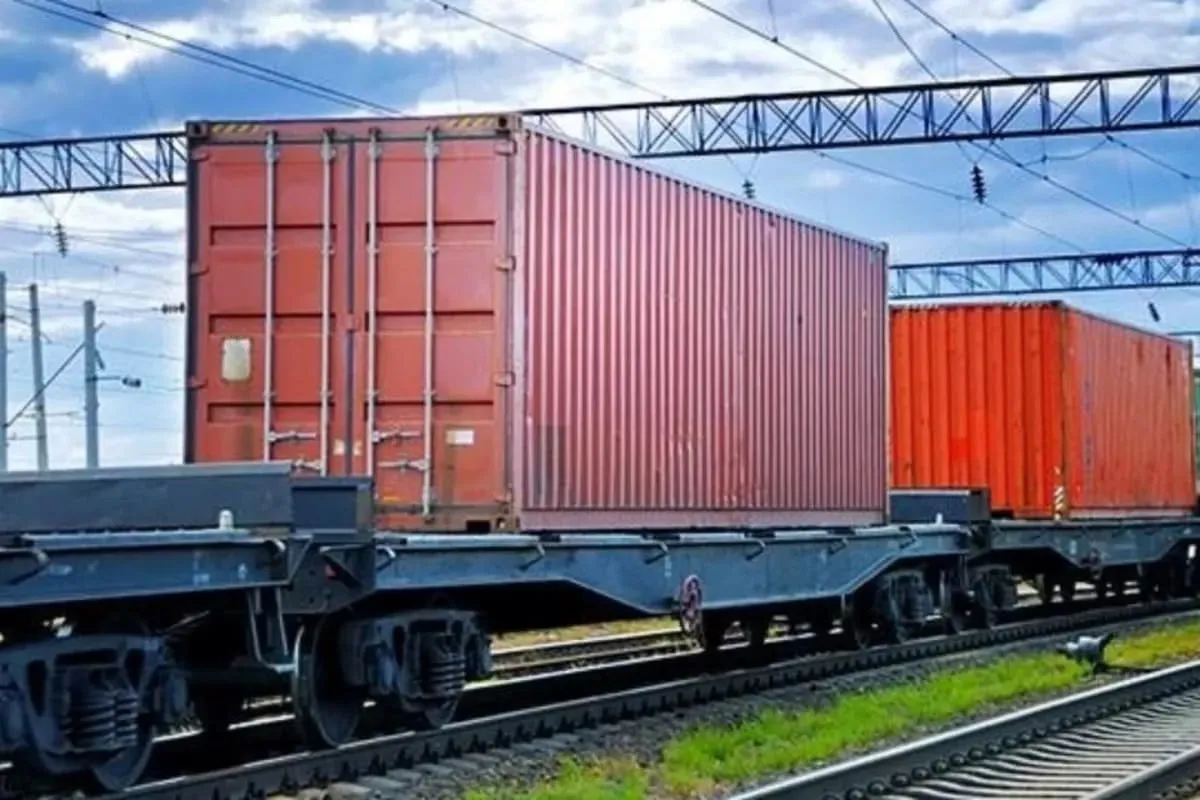
We started by looking at the nature of the cargo. Packaging materials are light and voluminous: a truck cubes out long before it comes anywhere near its weight limit. For cargo like this a 40-foot high-cube container gives significantly better economics per cubic metre, and rail adds the thing that was missing most: movement to a timetable.
We built the route through Duisburg, Europe's largest inland port and a key rail hub, which made it straightforward to draw cargo together from the German suppliers. From there the containers moved by train to the Polish-Ukrainian border, where at the cross-border terminal they were transferred from standard gauge (1,435 mm) onto broad gauge (1,520 mm), and continued to the Boryspil Interterminal (BIT) container terminal.
We prepared the customs side in advance. Packaging materials of EU origin enter Ukraine free of import duty under the free trade agreement, provided origin is properly evidenced by an EUR.1 certificate or an origin declaration on the invoice. VAT of 20% is payable on clearance. The shipments moved under a CIM/SMGS consignment note, which exists precisely for routes between the EU and broad-gauge countries, and we filed the declaration ahead of arrival so the containers would not sit at the terminal.
The client ended up with what the exercise was about in the first place: not record-breaking speed, but predictability. Transit times became stable, the warehouse plans intake in advance, and safety stock on site came down, because there was no longer any need to build several days of border risk into every order.