


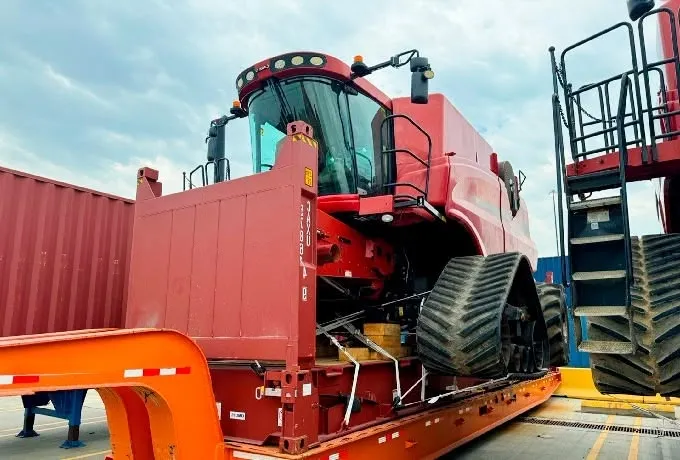
A combine does not fit a forty-foot container even with the header removed, neither by height nor by width. We did not consider dismantling: the cost of stripping the machine down and reassembling it eats the entire saving on the purchase, and nobody guarantees it will run the same afterwards. So we went with Ro-Ro, a vessel with a stern ramp where machines drive aboard under their own power and are lashed to the deck. The route ran through Baltimore and Bremerhaven, then on low-bed trailers across Poland to the farm.
Most of the preparation happens before the port, not at it. Ro-Ro lines set firm conditions for machinery: no more than a quarter tank of fuel, a working battery, functioning brakes, no oil leaks. Keys are handed over to the terminal, because stevedores reposition the units on board. Cleanliness is a separate matter. Soil left on wheels or inside a grain tank is a phytosanitary risk, and a unit can simply be refused at handover because of it. We arranged pressure washing at the auction yard, including the combine tank and the running gear recesses, and documented the result with a photo report.
Two items were not running: one tractor had a failed transmission, and the combine headers travelled separately. For those we used roll trailers, low wheeled platforms towed by a terminal tractor. The machines were secured to the platforms before boarding, so nothing had to be done with them on the vessel. On paper each unit moved as a vehicle with its own identification number: the package covered the Bill of Sale, title documents, the US export declaration and a full photographic record of condition before loading.
At Bremerhaven the machines were received, checked against the photo record and reloaded onto low-beds. In Ukraine they were cleared as agricultural machinery with the year of manufacture confirmed, since that drives both the duty rates and the import requirements. All six units were standing in the farm yard two weeks before harvest began. The deadline here is unforgiving: machinery that arrives in August costs the same and is worth almost nothing that season.