Case Studies

Exporting Oil in Flexitanks to the Middle East: a Train via East West Gate to Koper

A Ukrainian sunflower oil producer sold a large consignment to a buyer in the Middle East. The oil travelled in flexitanks, so it stayed in the same container from the plant to the buyer's warehouse, with no pumping over at the border or in port. The containers added up to a full train. The client's usual route ran through the Polish ports: north by rail to the Baltic, then by sea all the way around Europe. The buyer expected the oil by the agreed date. The client needed a shorter route with fewer transfers.

Exporting Oil in Flexitanks to the Middle East: a Train via East West Gate to Koper

One Train, One Transfer and the Sea Leg from the Adriatic

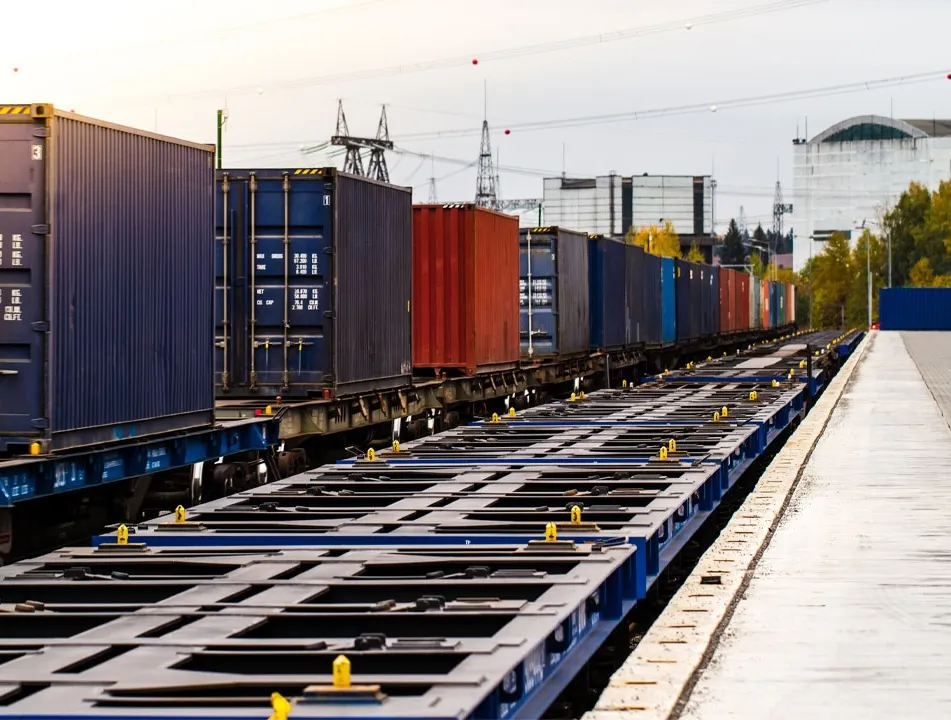
We proposed sending the oil south instead, through Hungary to the Slovenian port of Koper. The key point on the route is the East West Gate terminal at Fényeslitke, close to the Hungarian–Ukrainian border. Both gauges run into it: 1,520 mm broad gauge from the Ukrainian side and 1,435 mm European gauge. So the containers are not transferred at a border station. The train arrives on Ukrainian wagons straight into the terminal, cranes move the containers onto European wagons, and the train for Koper is made up there.

Flexitanks on rail come with limits. The oil moves with the train, and under hard braking or shunting the whole mass pushes against the bulkhead at the container door. So we used only flexitanks that had passed the COA rail impact test, and picked containers with sound floors and walls and no signs of repair. Each booking was cleared with the shipping line separately. A block train was also a safety choice: it runs from the terminal to the port without being broken up in marshalling yards, where the jolts are far harder than ordinary braking.

The paperwork was prepared so the train would never wait. The export declaration was filed in Ukraine, and across the EU the oil moved under a T1 transit declaration in NCTS all the way to Koper. Ukraine has applied the Convention on a Common Transit Procedure since October 2022, so there was no need to re-declare the transit at the Hungarian border. The certificate of origin, the quality and safety documents and everything the destination country requires were agreed with the buyer before filling. That way the port of arrival had no questions.

From East West Gate the train crossed Hungary and Slovenia to Koper, where the containers went to the terminal for the booked vessel. The client told us afterwards that it had been quite fast. The reason is simple: between the plant and the sea the containers changed wagons only once, at the Hungarian terminal. The train did not queue at the border.

Route

Ukraine → Middle East via East West Gate and Koper

The Adriatic ports give Ukrainian exports access to the Mediterranean without the long sea route around Europe. Koper has a direct rail link to Hungary, and East West Gate removes the main drawback of the western direction, the change of gauge: containers are transferred at a large terminal that handles several full-length trains at once. For liquid foodstuffs in containers that means fewer transfers and a shorter sea leg to Middle Eastern ports.

TGL Ukraine handles flexitank exports of liquid foodstuffs end to end: clearing the flexitank with the line, selecting containers, rail to the East West Gate terminal in Hungary, transfer onto 1,435 mm gauge, a block train to Koper, T1 transit through NCTS, ocean freight and documents for the destination country.

Client Testimonial

“We had always shipped through Poland and never even considered Hungary. TGL costed both options and showed us that Koper was the shorter way. My biggest worry was the transfer, because we had never had flexitanks moved by crane before. It all went calmly, and the buyer got the oil a little earlier than we had allowed for in the contract.”

Andriy P. — Commercial Director at an oil producer

Looking for a shorter export route to the Middle East?

Get a Quote