


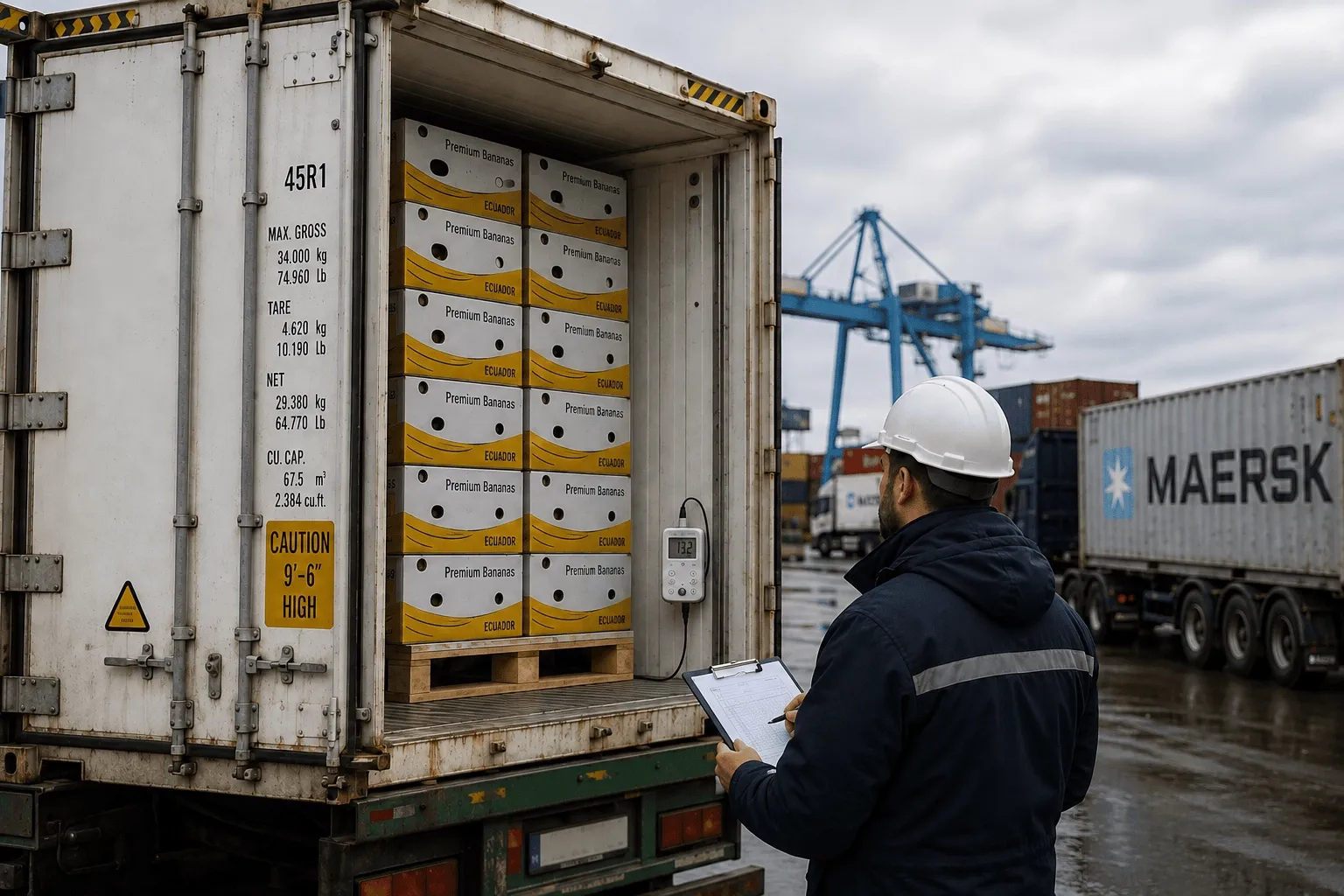
Bananas are picked green and deliberately prevented from ripening in transit: ripening happens in Ukraine, in gassing rooms, under control. So this is not simply refrigerated cargo, it is a very narrow temperature corridor. Below roughly +13 °C the fruit takes chilling injury, the grey streaking under the skin that cannot be undone. Above it, the fruit starts ripening on its own and the consignment arrives unfit for a normal gassing cycle. We fixed the carriage regime at +13.2 °C with mandatory fresh air ventilation of around 25 m³/h, because bananas respire, giving off carbon dioxide and ethylene, and ethylene is precisely the ripening hormone that triggers the process early inside a sealed box.
We then dealt with what usually ruins a consignment: preparing the container itself. Every reefer goes through a PTI, a full pre-trip inspection of the refrigeration unit with a report, before loading. A banana container is not pre-cooled before stuffing: the fruit is brought down to the required pulp temperature in the packhouse, and the unit in transit maintains the regime rather than pulling heat out of the pallets. Stuffing is done so as not to block the T-bar floor and to leave the air channels clear, otherwise the cold never reaches the upper tiers. We also placed our own independent temperature recorders inside the cargo, separate from the line's device, so that at handover there would be two versions of events rather than one.
The route ran from Guayaquil via transshipment to the port of Constanța, and onward by road to the client's distribution centre. The most vulnerable part of a chain like this is not the sea leg but the junctions: every transfer is a few hours during which the container has to be on a power socket. We separately agreed guaranteed plug-in and readings monitoring with the terminals, and for the road leg selected a chassis with a diesel genset so the unit kept running on wheels too. This is exactly where things used to fall apart: a container could sit unplugged for half a day and no document would record it.
The paperwork travelled as a phytosanitary certificate from the country of origin, a certificate of origin, invoice and packing list, and at handover a printout of the temperature profile for the whole route was added to the set. In Ukraine the cargo passes phytosanitary control by the State Service on Food Safety and Consumer Protection, so we filed the declaration ahead of arrival to keep the reefer out of a clearance queue while the clock ran inside it. The result: pulp temperature at handover within tolerance, fruit entering the rooms green and even, and the arguments with the supplier about whose fault it was simply stopped, because every consignment now comes with a full temperature profile.