


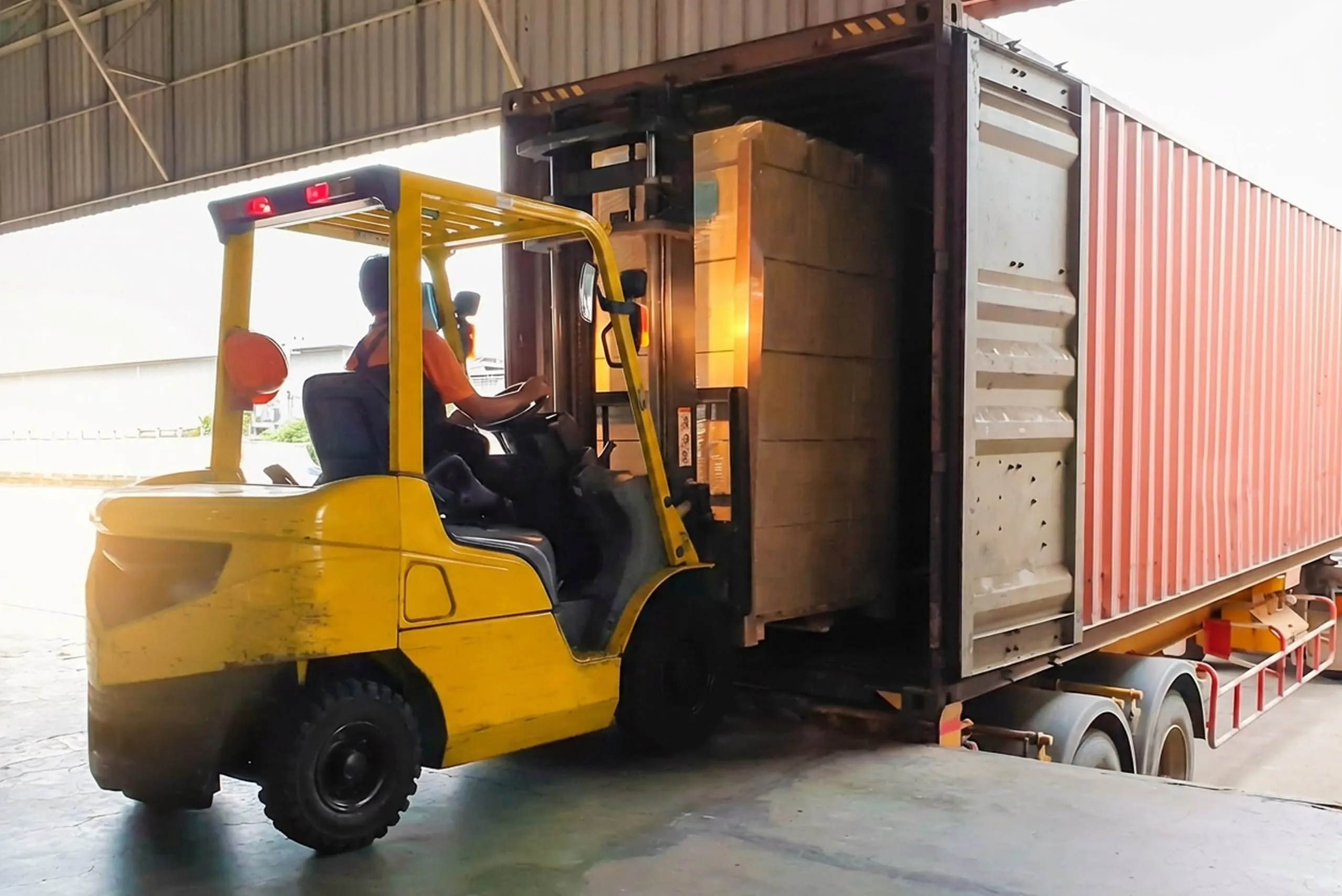
We began by working out what was actually costing the client money. Each consignment weighed between 900 and 2,800 kg and took up a handful of pallets, so any truck dedicated to it ran well below capacity. The client was not paying for weight, it was paying for the fact of a vehicle being dispatched, and it did that four times a week. On top of that, every consignment carried its own document set and its own customs clearance at the border.
We proposed a groupage scheme built around a single consolidation warehouse in Silesia, where most of the suppliers were based. Our vehicle collects the cargo on a fixed round: three plants are visited in one day, and the fourth supplier delivers to the warehouse itself. At the warehouse the consignments are received, checked against the packing lists, re-labelled against the client's order numbers and built into one shipment. The truck departs every Wednesday evening, regardless of how full it is.
We reduced the customs side to a single pass. The consolidated load moves under one T1 transit declaration to the customs office of destination in Ukraine, rather than four separate clearances at the border. Components of EU origin enter Ukraine free of import duty under the deep and comprehensive free trade area agreement, so we collect an origin declaration on the invoice or an EUR.1 certificate from every supplier before dispatch. VAT of 20% is payable on clearance. We file the import declaration ahead of the truck's arrival and book the border-crossing slot in the electronic queue in advance, tied to the specific departure day.
The outcome: instead of four random dates, the client now has one fixed intake day per week. Logistics cost per unit of components came down, because one vehicle dispatch is paid for instead of four, and the production schedule finally has something to rest on. The shop floor plans its shifts around a known replenishment day rather than around waiting for a call from a driver.