


The practical route for regular supply today is entirely overland: from the Bursa and Istanbul area across the Turkish-Bulgarian border, on through Bulgaria to the Danube bridge at Ruse–Giurgiu, then across Romania to the Siret–Porubne crossing and into Chernivtsi, from where the cargo moves across the Ukrainian road network. Real transit from loading to unloading runs at roughly five to seven days depending on queues at the crossings. Road charges, transit country vignettes and the Danube bridge toll were built into the rate from the outset, so the invoice after the trip would match what was agreed.
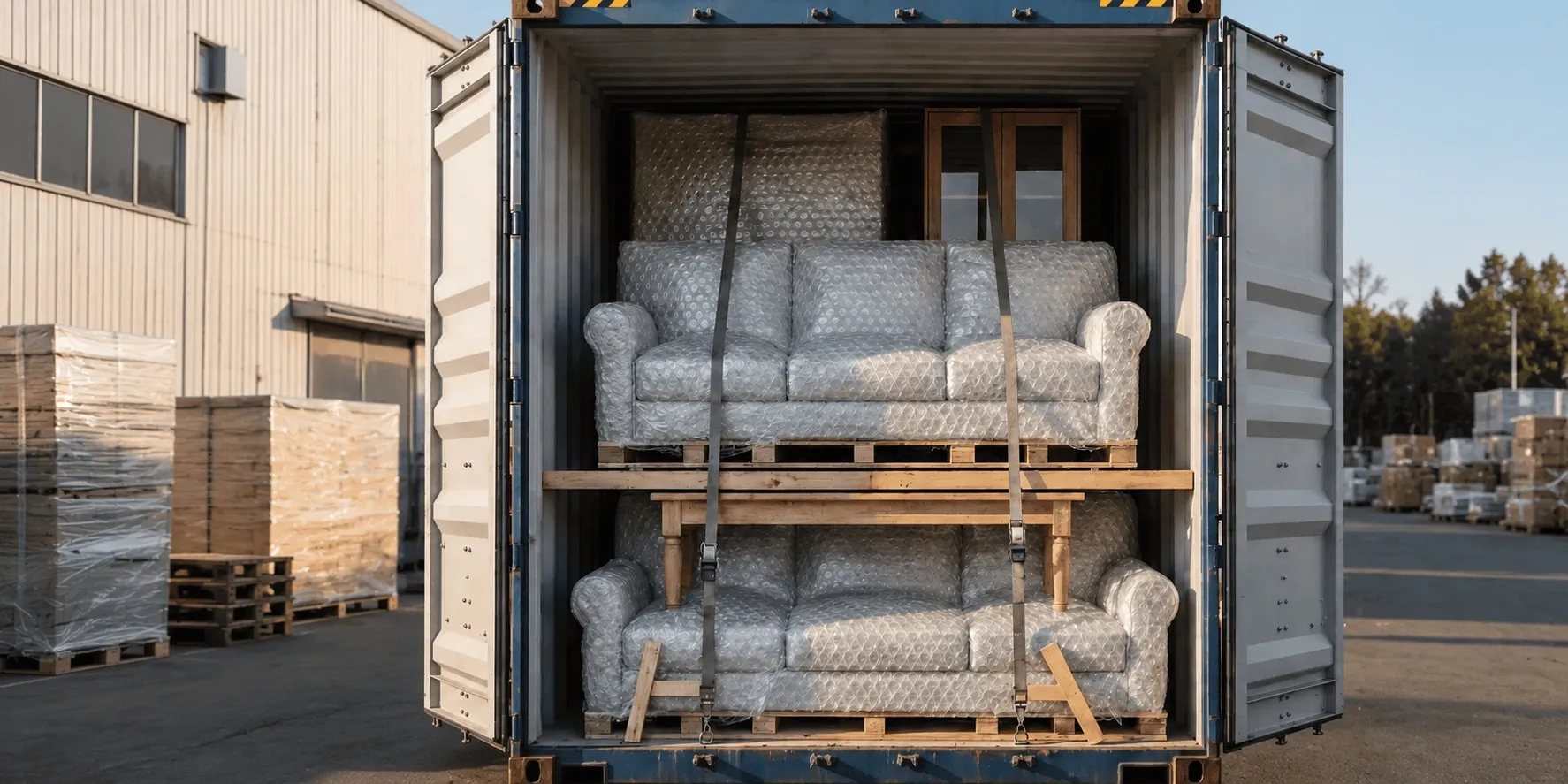
Then we recalculated the scheme itself. The client believed the volume was too small for a dedicated truck, but finished sofas and armchairs, wrapped for transit, are voluminous and relatively light cargo: the vehicle cubes out long before it approaches its weight limit. Once we combined three warehouses in one region into a single day's collection round, a dedicated truck came out cheaper per cubic metre than groupage, and several days faster, because it was not waiting for somebody else's cargo to accumulate. This is the typical picture for voluminous categories: groupage looks cheaper per item and loses on actual volume.
The transit side was handled under a TIR carnet. Both Turkey and Ukraine are parties to the TIR Convention, so the cargo passes through transit countries without separate declarations and financial guarantees at each border, which on a route crossing two transit states saves meaningful time. Where a T1 transit declaration suits better, we use that instead. We file the import declaration ahead of the truck's arrival and book the border-crossing slot in the electronic queue against a specific day, exactly as on the European lanes.
We dealt with duty separately. The free trade agreement between Ukraine and Turkey was ratified in July 2026 and enters into force once both sides complete the prescribed procedures. Until preferences apply, import duty is payable at general rates, so we based the client's costing on those rather than on future preferential ones, to keep the budget from being more optimistic than reality. At the same time we alerted the suppliers straight away to the need for proper evidence of origin: once the agreement is operative, the preferential rate cannot be claimed without it. The result was a fixed arrival day every two weeks, a lower cost per cubic metre, and a price that does not change after the trip.