


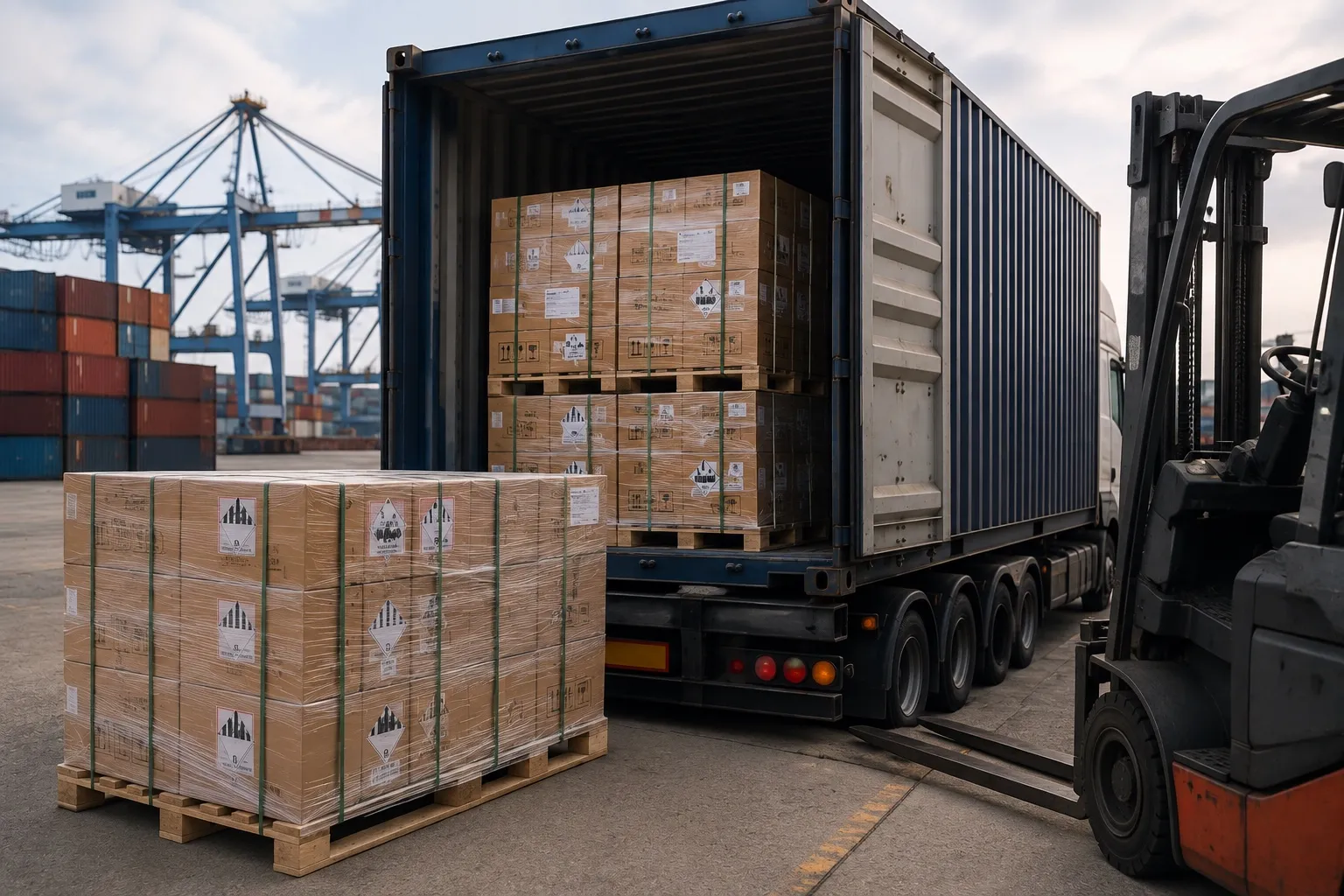
We began not by hunting for a rate but with classification, because classification determines everything that follows. Lithium-ion batteries shipped on their own are classified as UN3480, while the same cells packed with or contained in equipment carry different numbers, UN3481. This is not a formality: the UN number drives the packing instruction, the marking, the packaging requirements and the stowage conditions on board. From the manufacturer we requested the test summary under sub-section 38.3 of the UN Manual of Tests and Criteria along with the safety data sheet, and verified compliance with packing instruction P903 and special provisions 188, 230 and 310 of the IMDG Code. We separately checked the state of charge: for sea transport, lithium-ion batteries ship at no more than 30% of rated capacity, and that is a requirement, not a recommendation.
The second stage is the booking. Not every vessel and not every line accepts dangerous goods, the slots for it are limited, and the request has to go in early together with the dangerous goods declaration, before booking confirmation rather than after. The line reviews the classification, the marking, the packaging and the stowage plan against segregation rules. This is exactly where the client's first shipment had stopped: misdeclared dangerous goods are not merely rolled to the next sailing, they attract a penalty, and the shipper can end up on a line's internal list, after which booking anything at all becomes harder.
We built the route from a Chinese port to Gdansk. Dangerous goods containers are placed in a designated area of the terminal, have a limited dwell time and require advance notification to the port authority, so we planned the pick-up from the port ahead of time rather than reacting on arrival. Then came the part that is usually forgotten: once the cargo leaves the port, maritime rules end and road rules begin. Same cargo, same UN3480, same Class 9, but now under ADR, with a different transport document, written instructions in the cab, an ADR-certified driver and orange plates on the vehicle. We ran both legs as one chain, so nothing had to be re-papered in a hurry at the terminal gate.
Customs was prepared in parallel: battery modules and inverters fall under different tariff codes with different rates, so we agreed the duty calculation with the client before dispatch, to keep the project budget from moving after arrival. The declaration was filed ahead of the cargo. The consignment reached the site complete and without a single roll-over, and the client came away with a proven scheme: every subsequent order from the same supplier now travels with a full dangerous goods document set assembled before the booking is confirmed.