


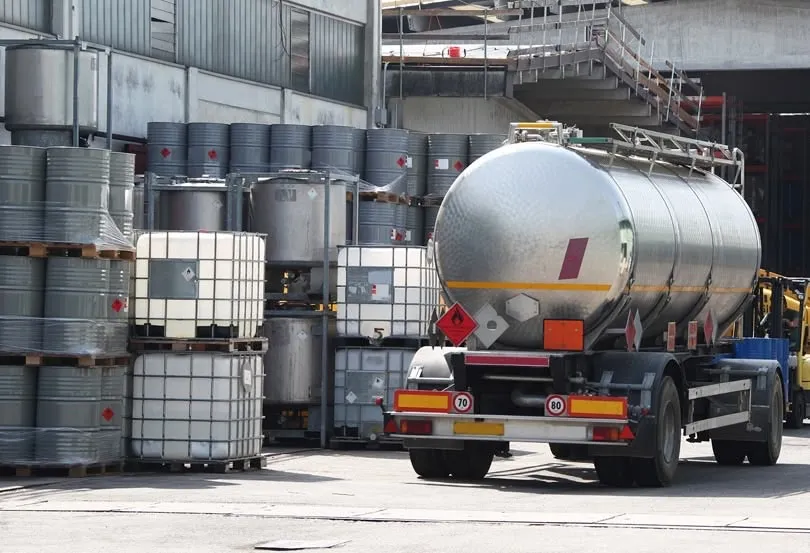
We started with the question that determines the cost of the whole solution: whether the traffic could fit inside the exemption. ADR allows limited quantities of dangerous goods to move under a simplified regime, without an approved vehicle and without an ADR-certified driver, as long as the calculated total for the load stays under a set threshold. We ran the numbers on the client's actual order volumes rather than on an optimistic assumption, and the answer was no: this was full ADR carriage. Settling that at the outset removed half the later surprises, because every requirement was known before the first trip instead of at the loading bay.
The cargo split across two classes: solvents are Class 3, flammable liquids, while acids and alkalis are Class 8, corrosives, and both travelled in drums and IBCs on pallets. Classification was built on the safety data sheet for each product, which we requested from the suppliers in advance: the UN number, class, packing group and proper shipping name all come from it, and so, later, does the tariff code for customs. We checked the packaging for UN certification and correct marking, and planned loading against the compatibility rules, since not all classes can share a vehicle without segregation.
For the movement we selected a tractor and trailer holding an approval certificate of the right type, a driver with an ADR certificate covering the relevant classes, a full set of emergency equipment and extinguishers, orange plates and hazard labels, and written instructions in the cab for use in an incident. Routing was planned separately against the tunnel restriction codes: a tunnel in a category that will not pass a given load can turn a truck around hundreds of kilometres from its destination, and that has to be built in at the planning stage. The scheme and the documents were reviewed with a dangerous goods safety adviser, since having one is a requirement for undertakings involved in moving dangerous goods, not a nice-to-have.
Customs ran in parallel: an ADR transport document with the description in the prescribed form, the CMR, a T1 transit declaration to an inland customs office, and a separate check on whether any of the items were controlled substances requiring a permit. Wherever the classes allowed shared loading, we combined suppliers into one vehicle and put the trips on a schedule. The outcome was steady raw material supply without stoppages, and every ADR requirement turned from a source of surprises into an ordinary checklist run before each dispatch.