


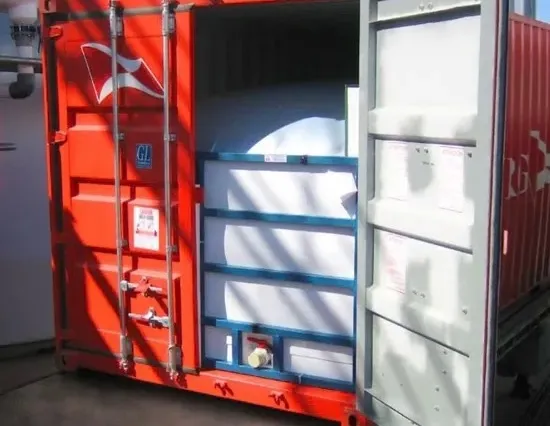
We proposed shipping in flexitanks: single-use food-grade liners fitted inside a standard 20-foot container. A flexitank of this type holds around 24,000 litres, which for sunflower oil works out at roughly 21 to 22 tonnes net. A 20-foot container rather than a 40-foot one, because here the limiting factor is weight, not volume.
Preparing a container for a flexitank comes with its own requirements: the box must be food-grade, dry, free of odours, with no protruding nails or signs of repair, and fitted with a bulkhead at the door end. We cleared every booking separately with the shipping line, since lines only accept flexitanks from suppliers working to the COA code of practice.
Filling took place directly at the client's plant, after which the containers moved by rail to the ports of Gdansk and Koper. At the Polish border they were transferred from broad-gauge platforms (1,520 mm) onto standard-gauge platforms (1,435 mm): for containerised cargo this is a routine crane operation, which we built into the schedule in advance. Two ports instead of one gave the client a fallback: depending on sailing schedules and rates, we routed each batch either via the Baltic or via the Adriatic.
The documentary side mattered as much as the transport. Exporting food products to China requires the producer to be registered with China's General Administration of Customs (GACC), along with a health certificate from the State Service of Ukraine on Food Safety and Consumer Protection, a certificate of origin from the Chamber of Commerce and Industry, and test reports for each batch. We standardised this package for the client, so every subsequent shipment was processed against a proven template, with no hold-ups at the port.